Utah County Says Religious Freedom Doesn't Cover Psilocybin Use — and the Case Is About More Than One Church
Prosecutors in Utah are arguing the First Amendment stops at sacrament. The legal theory at stake could reshape how every other state handles psychedelic religious-use defenses.

Utah County prosecutors made a striking argument in a state court this month: the U.S. Constitution's protection of religious exercise, and Utah's own state-level Religious Freedom Restoration Act, do not extend to the sacramental use of psilocybin mushrooms. The case is small in scale and large in consequence.
If the court agrees, the ruling becomes the most explicit American test yet of how far religious-freedom statutes can be stretched to cover Schedule I substances. If it disagrees, the door cracks open for a much wider conversation about psychedelic sacrament — and not only in Utah.
The case in plain English
The defendants are members of a small psychedelic religious community in Utah County who used psilocybin mushrooms as a religious sacrament. They were charged under Utah's controlled-substance statutes. They are now asking the court to dismiss the charges on religious-freedom grounds, citing both the federal Religious Freedom Restoration Act (RFRA) and Utah's analogous state law.
Utah County's prosecutors are pushing back on the core premise. Their argument, distilled: religious-freedom protections in U.S. law are about belief and practice, not substance regulation, and a state has a compelling interest in enforcing its drug laws uniformly regardless of religious framing.
Why this isn't UDV redux
Most readers familiar with this area think first of Gonzales v. O Centro Espírita Beneficente União do Vegetal, the unanimous 2006 Supreme Court ruling that protected ayahuasca use by a Brazilian-American church. The Court found federal RFRA applied and the government had failed to show a compelling interest sharp enough to override sincere religious practice.
UDV is the obvious precedent. It is also more limited than the headlines remember:
- The ruling protected one named church with a documented sincere religious practice traceable to a specific tradition.
- It applied the federal RFRA standard against the federal government's interests.
- It did not create a blanket exemption that newer psychedelic congregations can claim by registering as a religion.
Subsequent litigation made the limits clearer. The 9th Circuit and other federal courts have, in different cases, declined to extend the UDV reasoning automatically to groups whose religious practice is more recent or whose sacrament is freshly defined. The Utah County case takes that limiting principle into the psilocybin context — at the state level, against a state-law-based defense.
What makes Utah specifically interesting
Utah was the first state to pass a Religious Freedom Restoration Act after the federal one, and the state takes its religious-liberty doctrine seriously. The same legal climate that protects Mormon practice protects every other sincere claim. The prosecutors are not arguing religion doesn't count; they are arguing that substance regulation is a categorically separate question.
Translating that argument into the question the court must answer: does the state's interest in uniform drug enforcement constitute a "compelling government interest" sufficient to survive the strict-scrutiny test that RFRA requires? Utah County says yes. The defendants say no — that without evidence of harm, generic drug-control concerns are not enough.
The Utah ruling will be the first explicit American court answer to whether state religious-freedom statutes shield psilocybin sacrament. Once that answer exists in writing, every prosecutor and defense attorney in the country will cite it. Small case, long shadow.
Why every other state is watching
Religious-use defenses are quietly proliferating across the country, often in jurisdictions where conventional psilocybin reform has stalled. In Florida, Texas, and several Midwestern states, psychedelic congregations have organized in the past three years. Most have flown under the prosecutorial radar. The Utah ruling will become a reference point for prosecutors in those states the moment it is issued — in either direction.
The Utah County argument is not anti-religion. It is anti-blanket-exemption. The state is asking the court to draw a fence around drug law, on the theory that nothing else functions if the fence has holes.
A defense win would be cited by every emerging psychedelic congregation in the country. A prosecution win would harden the gap between protected indigenous-traditional use and newer Western-formed religious psilocybin practice — and push reformers back to the conventional state-legislative and ballot routes, where Minnesota, Colorado, and Oregon have all moved.
What the law actually requires
Federal RFRA, the Utah statute, and the case law built around them require the state to do two things to override a religious claim:
- Show a compelling government interest — not a generalized one. Uniform enforcement is a familiar government interest, but courts increasingly want specifics: actual harm, actual public-safety risk, actual administrative impossibility.
- Demonstrate that the regulation is the least restrictive means of advancing that interest. A blanket criminal prohibition is the most restrictive option on the menu.
The defendants' strongest move is to push the court onto the "least restrictive means" prong. Religious-use registries, monitored access programs, and supervised-administration carve-outs are all less restrictive than criminal prosecution and have analogs in other states' approaches to controlled substances.
What the strains tell you about the practice
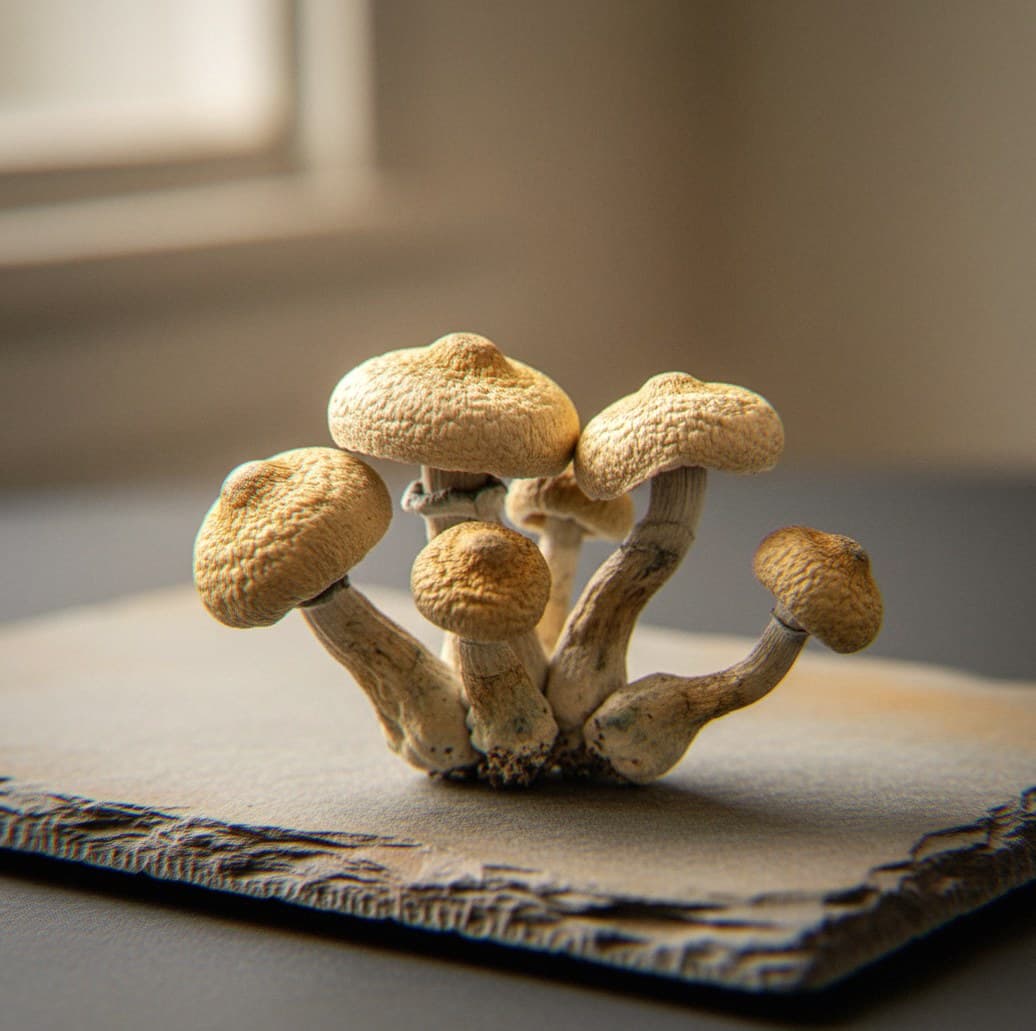
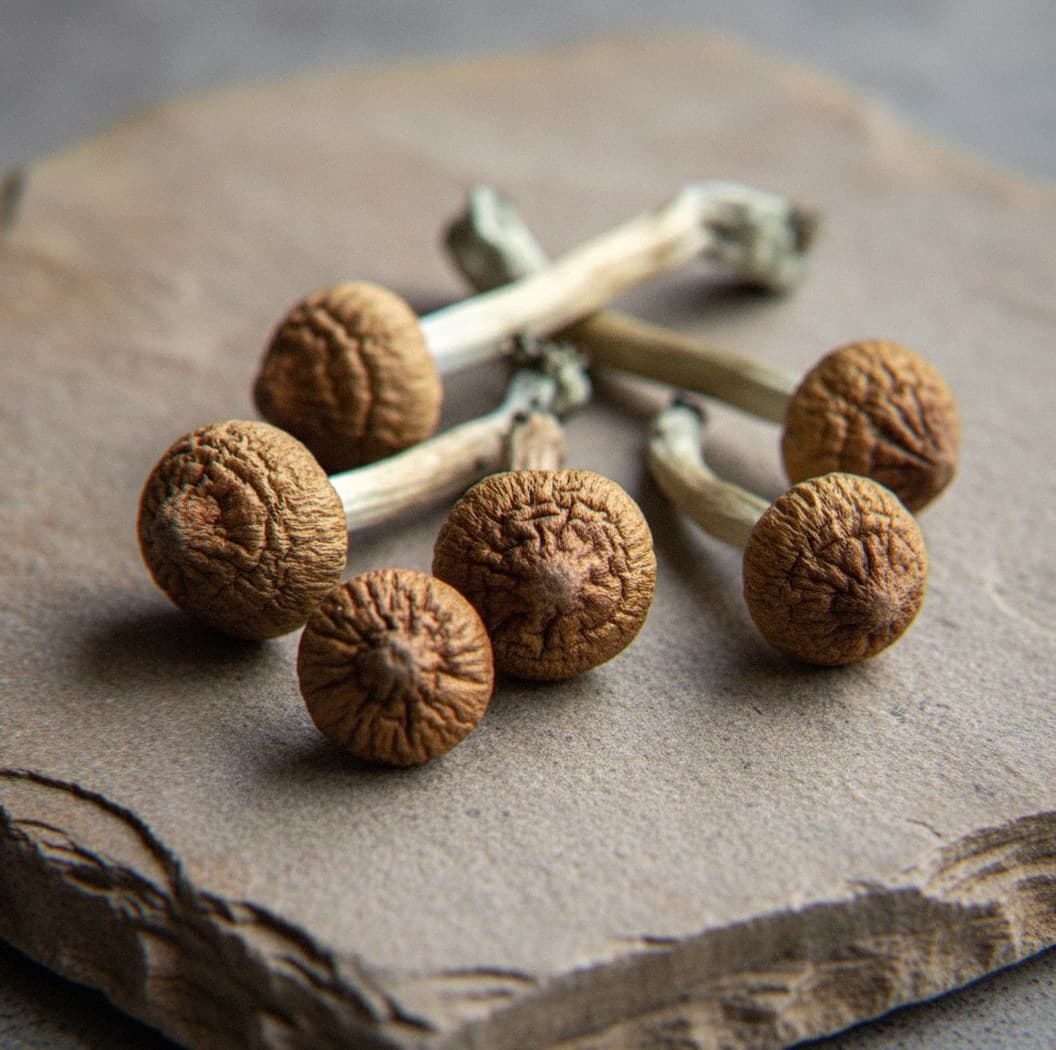
The varieties used in modern psilocybin-based religious practice in the U.S. are overwhelmingly Psilocybe cubensis cultivars — not the ceremonially-rooted P. mexicana or P. mazatecorum of traditional Mazatec practice. Common cultivars cited in this kind of casework include long-standing varieties like Golden Teacher and the heritage Oaxacan-lineage Mazatapec, sometimes alongside the slow-growing Stargazer favored in contemplative dosing.
That detail matters legally. One of the questions Utah County's filing raises — implicitly — is whether a religious practice built around a commercially-distributed cultivar inherits the same protection as practice built around a traditional botanical source. UDV's sacramental tea is brewed from specific Amazonian plants tied to a recorded indigenous lineage. The cultural and legal weight of that lineage is not trivial in court.
What to watch
The court is being asked to rule on motions, not to hold a full trial yet. Three signals to track:
- The strict-scrutiny analysis. Whether the court treats "uniform drug enforcement" as automatically compelling — or asks the state to specify harm.
- The sincerity finding. Whether the court accepts the defendants' religious practice as sincere, or treats it as a post-hoc legal vehicle.
- The remedy. If the court rules for the defendants, does it craft a narrow registry-style accommodation, or strike the charges outright?
Whatever the trial court decides, an appeal is essentially certain. Utah's Supreme Court will get the question eventually. Other state courts will read its answer. This is the kind of small case that quietly sets the tone for a decade of psychedelic religious-use policy across the United States.