The Science of Psilocybin: What the Research Actually Shows
The science is promising, uneven, and more interesting when we stop making it carry a sales deck.
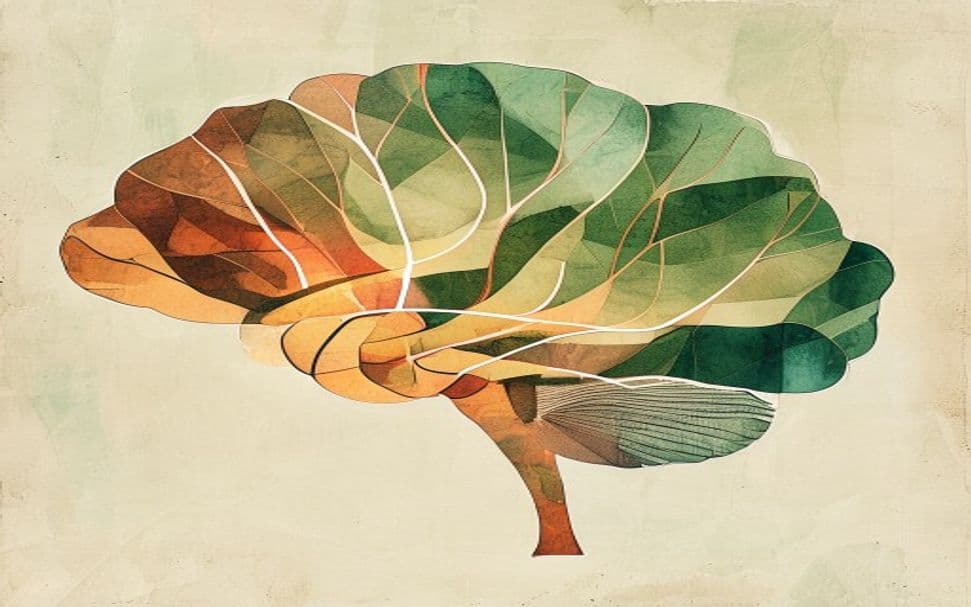
Psilocybin clinical trial is a search phrase with real stakes behind it. The useful answer starts with concrete context: U.S. federal law still lists psilocybin as Schedule I, Oregon and Colorado have built state-regulated pathways, and clinical research uses screening and support that casual internet summaries often skip.
The science is promising, uneven, and more interesting when we stop making it carry a sales deck. This guide is educational journalism, not medical advice, legal advice, or a set of instructions for obtaining or using any substance.
Psilocybin becomes psilocin before the brain does the interesting part
Psilocybin becomes psilocin before the brain does the interesting part. In the context of psilocybin clinical trial, the practical question is not how to make the topic sound more dramatic. It is what a careful reader can verify, what remains uncertain, and which risks deserve attention before a personal story becomes a plan. The strongest research story is specific: population, dose, support model, endpoint, and follow-up window.
A useful way to read this section is to separate signal from noise. Primary research, agency rules, and clinical protocols deserve more weight than anecdotes. The next step may be Microdosing 101 or Beginner's Guide, but the through-line stays the same: no medical claims, no sourcing guidance, and no pretending that a strain name such as B+ replaces screening or context.
For U.S. readers, the legal and clinical layers also matter. Oregon and Colorado show how regulated models create containers around screening, support, and documentation. Outside those models, uncertainty increases, which is why this guide keeps returning to preparation, harm reduction, and integration instead of shortcut advice.
The 5-HT2A serotonin receptor is central, not magical
The 5-HT2A serotonin receptor is central, not magical. In the context of psilocybin clinical trial, the practical question is not how to make the topic sound more dramatic. It is what a careful reader can verify, what remains uncertain, and which risks deserve attention before a personal story becomes a plan. The strongest research story is specific: population, dose, support model, endpoint, and follow-up window.
A useful way to read this section is to separate signal from noise. Primary research, agency rules, and clinical protocols deserve more weight than anecdotes. The next step may be Beginner's Guide or Integration, but the through-line stays the same: no medical claims, no sourcing guidance, and no pretending that a strain name such as Golden Teacher replaces screening or context.
The default mode network is a useful map, not the whole territory
The default mode network is a useful map, not the whole territory. In the context of psilocybin clinical trial, the practical question is not how to make the topic sound more dramatic. It is what a careful reader can verify, what remains uncertain, and which risks deserve attention before a personal story becomes a plan. The strongest research story is specific: population, dose, support model, endpoint, and follow-up window.
A useful way to read this section is to separate signal from noise. Primary research, agency rules, and clinical protocols deserve more weight than anecdotes. The next step may be Integration or Microdosing 101, but the through-line stays the same: no medical claims, no sourcing guidance, and no pretending that a strain name such as B+ replaces screening or context.
For U.S. readers, the legal and clinical layers also matter. Oregon and Colorado show how regulated models create containers around screening, support, and documentation. Outside those models, uncertainty increases, which is why this guide keeps returning to preparation, harm reduction, and integration instead of shortcut advice.
Treatment-resistant depression data is promising and still bounded
Treatment-resistant depression data is promising and still bounded. In the context of psilocybin clinical trial, the practical question is not how to make the topic sound more dramatic. It is what a careful reader can verify, what remains uncertain, and which risks deserve attention before a personal story becomes a plan. The strongest research story is specific: population, dose, support model, endpoint, and follow-up window.
A useful way to read this section is to separate signal from noise. Primary research, agency rules, and clinical protocols deserve more weight than anecdotes. The next step may be Microdosing 101 or Beginner's Guide, but the through-line stays the same: no medical claims, no sourcing guidance, and no pretending that a strain name such as Golden Teacher replaces screening or context.
The science gets more credible when it becomes less grandiose: receptors, networks, protocols, outcomes, limits.Shroom Atlas editorial desk
End-of-life anxiety gave the field an early clinical signal
End-of-life anxiety gave the field an early clinical signal. In the context of psilocybin clinical trial, the practical question is not how to make the topic sound more dramatic. It is what a careful reader can verify, what remains uncertain, and which risks deserve attention before a personal story becomes a plan. The strongest research story is specific: population, dose, support model, endpoint, and follow-up window.
A useful way to read this section is to separate signal from noise. Primary research, agency rules, and clinical protocols deserve more weight than anecdotes. The next step may be Beginner's Guide or Integration, but the through-line stays the same: no medical claims, no sourcing guidance, and no pretending that a strain name such as B+ replaces screening or context.
For U.S. readers, the legal and clinical layers also matter. Oregon and Colorado show how regulated models create containers around screening, support, and documentation. Outside those models, uncertainty increases, which is why this guide keeps returning to preparation, harm reduction, and integration instead of shortcut advice.
PTSD, alcohol use, and OCD remain smaller research signals
PTSD, alcohol use, and OCD remain smaller research signals. In the context of psilocybin clinical trial, the practical question is not how to make the topic sound more dramatic. It is what a careful reader can verify, what remains uncertain, and which risks deserve attention before a personal story becomes a plan. The strongest research story is specific: population, dose, support model, endpoint, and follow-up window.
A useful way to read this section is to separate signal from noise. Primary research, agency rules, and clinical protocols deserve more weight than anecdotes. The next step may be Integration or Microdosing 101, but the through-line stays the same: no medical claims, no sourcing guidance, and no pretending that a strain name such as Golden Teacher replaces screening or context.
Psilocybin neuroplasticity is real enough to study and easy to overstate
Psilocybin neuroplasticity is real enough to study and easy to overstate. In the context of psilocybin clinical trial, the practical question is not how to make the topic sound more dramatic. It is what a careful reader can verify, what remains uncertain, and which risks deserve attention before a personal story becomes a plan. The strongest research story is specific: population, dose, support model, endpoint, and follow-up window.
A useful way to read this section is to separate signal from noise. Primary research, agency rules, and clinical protocols deserve more weight than anecdotes. The next step may be Microdosing 101 or Beginner's Guide, but the through-line stays the same: no medical claims, no sourcing guidance, and no pretending that a strain name such as B+ replaces screening or context.
For U.S. readers, the legal and clinical layers also matter. Oregon and Colorado show how regulated models create containers around screening, support, and documentation. Outside those models, uncertainty increases, which is why this guide keeps returning to preparation, harm reduction, and integration instead of shortcut advice.
FDA breakthrough designation is a process marker, not approval
FDA breakthrough designation is a process marker, not approval. In the context of psilocybin clinical trial, the practical question is not how to make the topic sound more dramatic. It is what a careful reader can verify, what remains uncertain, and which risks deserve attention before a personal story becomes a plan. The strongest research story is specific: population, dose, support model, endpoint, and follow-up window.
A useful way to read this section is to separate signal from noise. Primary research, agency rules, and clinical protocols deserve more weight than anecdotes. The next step may be Beginner's Guide or Integration, but the through-line stays the same: no medical claims, no sourcing guidance, and no pretending that a strain name such as Golden Teacher replaces screening or context.
The reason psilocybin clinical trial deserves careful treatment is simple: better information lowers the temperature. It helps readers distinguish early research from proof, legality from enforcement discretion, and preparation from bravado.
Sources and further reading
- NCBI Bookshelf: psilocybin pharmacology and clinical context
- JAMA Psychiatry: Johns Hopkins psilocybin-assisted therapy trial
- New England Journal of Medicine: COMP360 psilocybin for treatment-resistant depression
- Oregon Health Authority: Oregon Psilocybin Services
- Colorado Department of Natural Medicine